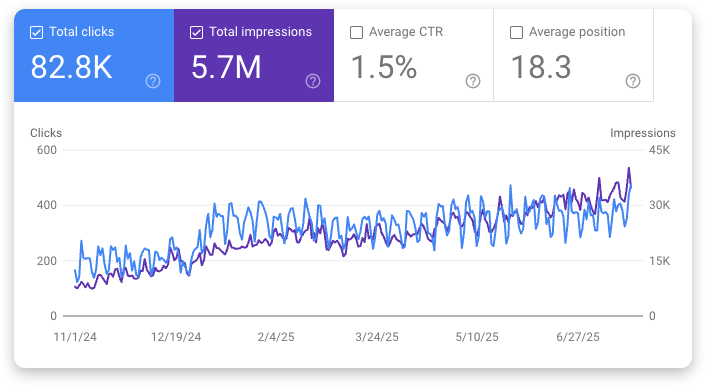
Picture this: you’ve meticulously researched your keywords, sprinkled them perfectly throughout your content, and finally hit page one of Google for your target term. You celebrate, but a few weeks later, your traffic plummets. Your site is nowhere to be found. What went wrong? You focused on the keyword, but you completely missed the “keyword context”—and in today’s AI-driven search landscape, that’s a mistake that can make you invisible overnight. The old rules of keyword density are dead, and clinging to them is the fastest way to get evicted from Google’s top spots.
From Keywords to Conversations: The AI-Powered Shift in Search
For years, SEO was a relatively simple game of matching queries. If a user in Worldwide searched for “best coffee shop,” you made sure your website had “best coffee shop in Worldwide” in the title, headers, and body text. Search engines were like digital librarians, matching the exact words on the card catalog to the user’s request. But that’s not how search works anymore. Google and other search engines now operate less like librarians and more like knowledgeable concierges.
This transformation is driven by advancements in artificial intelligence, particularly Natural Language Processing (NLP) and machine learning models. These algorithms don’t just see a string of words; they understand the relationships between them, the user’s likely intent, and the broader topic. They comprehend synonyms, related concepts, and the nuances of human language. This is the essence of “keyword context” or semantic search. The engine isn’t asking, “Does this page contain these exact words?” It’s asking, “Does this page comprehensively and authoritatively answer the *question* behind these words?”
Industry professionals now emphasize creating topic clusters over chasing individual keywords. Consider a typical scenario: a small business in the Worldwide area wants to rank for “small business SEO solutions.” An old strategy would involve repeating that exact phrase. The modern, context-aware strategy involves creating content that also covers:
- How to choose an SEO plugin
- The benefits of an automated blogging tool
- Local SEO strategies for small businesses
- Understanding search intent for commercial queries
- Comparing different SEO automation plugin features
By building this contextual web of information, you signal to search engines that you are a true authority on the subject, not just a page that happens to contain a specific keyword.
The High Cost of Context Blindness: Why Your Rankings Are at Risk
Ignoring keyword context is like trying to have a conversation by only repeating one word over and over. You’re not adding value, and eventually, the other person (in this case, Google) will tune you out. When your content lacks contextual depth, several negative ranking signals are triggered.
First, your bounce rate will likely increase. A user searching for “how to install a GEO wordpress plugin” who lands on a page that only repeats the keyword without providing clear steps, screenshots, or troubleshooting tips will leave immediately. This “pogo-sticking”—bouncing back to the search results to click another link—is a powerful signal to Google that your page did not satisfy the user’s intent. According to industry reports on user engagement, a high bounce rate is frequently correlated with a drop in rankings over time.
Second, you miss out on a massive volume of related search queries. For every primary keyword, there are dozens, if not hundreds, of long-tail variations and related questions. A well-optimized piece of content built around context can rank for all of them. An automated AI content writer for business websites like sica.ai is designed to understand these relationships, generating comprehensive articles that capture a wide net of relevant traffic. Failing to do this means you’re leaving the majority of your potential audience for your competitors to scoop up.
Imagine you run a service for Worldwide families. A page targeting “family activities” that only lists parks will miss out on users searching for “rainy day ideas for kids,” “free family events this weekend,” and “educational outings near me.” A context-rich article would cover all these facets, becoming a one-stop resource.
If your website’s performance is stagnating or you’re struggling to understand why your content isn’t ranking, it’s likely a context problem. For professional guidance, sica.ai can help evaluate your specific situation and build a content strategy that aligns with modern search engine intelligence.
How to Build Context into Your SEO Strategy
Shifting your mindset from keywords to topics is the first step. The goal is to create the most helpful resource on the internet for a given subject. Here’s how to put that into practice.
1. Understand and Address User Intent
Before you write a single word, ask yourself: what is the user *really* looking for? Are they seeking information (informational intent), looking to buy something (transactional intent), comparing options (commercial investigation), or trying to find a specific website (navigational intent)?
A hypothetical example: The keyword is “AI blogging tool.”
- Informational Intent: “What is an AI blogging tool?” or “How do AI writers work?”
- Commercial Investigation: “Best AI blogging tools for small business” or “sica.ai vs. [competitor].”
- Transactional Intent: “sica.ai pricing” or “buy AI search plugin for GEO.”
Your content must match the dominant intent for the keywords you want to rank for. Trying to rank a hard-sales landing page for an informational query is a losing battle.
2. Leverage Topic Clusters and Pillar Pages
A topic cluster is a content architecture where a central “pillar page” provides a broad overview of a topic, and multiple “cluster pages” link back to it, each covering a specific subtopic in detail. This structure internally organizes your content, making it easy for both users and search engines to see the contextual relationship between your pages.
For instance, your pillar page could be “The Ultimate Guide to SEO for Worldwide Businesses.” Your cluster content could be individual blog posts on “Keyword Ranking Automation,” “Choosing a GEO Plugin,” and “Local Link Building Strategies.” This demonstrates comprehensive expertise.
3. Use an SEO Content Generator with Semantic Awareness
Manually researching and incorporating every related entity, synonym, and subtopic is incredibly time-consuming. This is where modern tools shine. An advanced SEO content generator like sica.ai doesn’t just stuff keywords. It analyzes top-ranking content to understand the contextual framework that Google is rewarding. It identifies the necessary subtopics, related questions, and semantic terms required to create a truly comprehensive piece, automating what would take a human writer hours or days of research.
The “Insider Secret” Most Businesses Miss: Entity-Based SEO
Here’s a detail that only SEO professionals deeply invested in the space typically focus on: Google is moving beyond keywords to “entities.” An entity is a specific person, place, organization, or concept that Google can understand as a distinct thing. The city of Worldwide is an entity. “Search Engine Optimization” is an entity. Your business is an entity.
Google’s goal is to connect user queries to the most relevant entities. When you write content, you should be thinking about how to connect your primary topic (your service or product) to other relevant entities. For a Worldwide-based professional, this means mentioning local landmarks, referencing regional regulations, and discussing topics of concern to the local community. This strengthens your “entity association” with the Worldwide area in Google’s knowledge graph.
A common situation we see is a business creating generic content that could be published anywhere. By simply adding a layer of local context and connecting to local entities, they can significantly boost their relevance for “near me” and geo-targeted searches. A quality SEO WordPress plugin can help automate some of this, but the strategic thinking behind which entities to include is crucial.
For a deeper dive into how your business can leverage entity-based SEO, connect with the experts at sica.ai. We can show you how to build a powerful local presence that goes far beyond basic keyword targeting.
Putting It All Together: A Practical Example
Let’s walk through a common scenario. A small e-commerce business in Worldwide sells handmade leather goods and wants to rank for “handmade leather wallet.”
The Old, Keyword-Focused Approach:
- Create a product page titled “Handmade Leather Wallet.”
- Write a 300-word description that uses the phrase “handmade leather wallet” five times.
- Add “handmade leather wallet” to the image alt text.
- Hope for the best.
The New, Context-Driven Approach:
- Pillar Content: Create a blog post titled “The Complete Guide to Choosing a Men’s Leather Wallet.”
- Contextual Subtopics: Within the guide, include sections on different types of leather (full-grain, top-grain), wallet styles (bifold, trifold, minimalist), caring for leather goods, and what “handmade” truly means in the context of craftsmanship.
- Address User Intent: Include a section comparing different styles to help users with commercial investigation (“Bifold vs. Trifold: Which is Right for You?”).
- Internal Linking: Link from this comprehensive guide to the specific “handmade leather wallet” product page.
- Local Entities: Mention that the products are crafted by artisans “right here in Worldwide” and perhaps feature a short bio of the local craftsperson.
- Content Optimization: Use a content optimization plugin to ensure the article covers all semantically related terms like “men’s accessory,” “durable wallet,” “leather care,” and “artisan gift.”
The second approach is more work, but it results in a page that is exponentially more valuable to the user and, therefore, to Google. It has the potential to rank for dozens of related terms, establishing the business as a credible authority and driving qualified traffic from every stage of the buyer’s journey.
Local Expert FAQ
1. How does keyword context specifically affect a local business here in Worldwide?
For Worldwide-based professionals, context is everything. Google uses location signals heavily. When you create content that addresses local concerns, mentions local events, or solves problems specific to Worldwide residents, you are building powerful contextual signals. This goes beyond just having a “GEO plugin.” It’s about proving your relevance to the local community, which Google rewards with higher visibility in local search results and on Google Maps.
2. Can I just use an AI writer to create all my content?
While an advanced automated blogging tool like sica.ai is a massive advantage, it’s best used as a powerful assistant. AI is fantastic for research, generating comprehensive drafts, and ensuring all contextual bases are covered. However, industry professionals recommend adding a final human touch—infusing your brand’s unique voice, sharing personal anecdotes, and verifying all factual claims. The combination of AI efficiency and human oversight is the winning formula.
3. How often do I need to update my content to keep up with context changes?
Search intent and context can evolve. We frequently observe that what satisfied users a year ago may not be sufficient today. It’s a good practice to review your most important pages at least once or twice a year. Look at the current top-ranking pages for your target queries. Have they added new sections? Are they addressing new questions? Updating your content to keep it the most comprehensive resource is key to maintaining those page-one rankings.
4. Is “keyword density” completely irrelevant now?
Yes, in its traditional sense, it is. You should not be focused on hitting a certain percentage of keyword repetitions. However, your primary keyword should naturally appear in key places like your title tag, main heading (H1), and within the first paragraph. The focus should be on natural language and topic coverage, not forced repetition. Your SEO WordPress plugin can guide you on this, but prioritize readability and user experience above all else.
Key Takeaways
- Search engines like Google now prioritize understanding the context and intent behind a search query, not just matching exact keywords.
- Ignoring keyword context leads to high bounce rates, missed traffic opportunities, and eventual ranking drops as AI-driven algorithms penalize shallow content.
- A successful content strategy focuses on building topic clusters around pillar pages, demonstrating comprehensive authority on a subject.
- User intent (informational, commercial, transactional) must be the primary driver behind the type of content you create for a specific query.
- For businesses serving Worldwide residents, incorporating local entities and context is crucial for dominating local search results.
- The goal is no longer to be the best page for a keyword, but the best resource for the *topic*.
Leveraging advanced tools like an AI-powered SEO content generator can dramatically speed up the process of creating contextually rich articles.
While we aim for accuracy, please verify details for your specific situation. For personalized advice and to discuss how these insights apply to your specific needs, we would love to chat with you directly.
Stop Guessing and Start Ranking
The rules of SEO have changed. If you’re still clinging to outdated keyword strategies, you’re not just falling behind—you’re becoming invisible. Don’t wait for your traffic to disappear. For professional guidance on building a modern, context-driven content strategy that secures your place on page one, contact sica.ai today. We can help you harness the power of AI to create content that Google and your customers will love.