The “AI Myth” You’ve Been Sold: Why GEO SEO Plugins Aren’t Living Up to the Hype
Here’s a bold claim that might surprise you: that shiny new GEO WordPress plugin powered by “AI” is likely doing more to complicate your local SEO than to solve it. In the rush to capitalize on the artificial intelligence wave, many small business owners are investing in automated tools that promise effortless, geo-targeted content and top rankings. The reality, however, is a messy and often disappointing affair that can leave your website with generic, low-quality pages that fail to connect with local customers and may even attract penalties from search engines.
The Seductive Promise of Automated Local Dominance
The pitch is incredibly appealing. An automated AI content writer for business websites, often packaged as a GEO WordPress plugin, claims to solve one of the most time-consuming aspects of local SEO: creating unique content for every single service area. Imagine an automated blogging tool that can instantly generate dozens or even hundreds of pages like “Plumber in [City A],” “Emergency Plumbing [City B],” and “Pipe Repair [City C],” each supposedly optimized to attract local customers.
For a small business owner in the Worldwide area, this sounds like a dream. The idea of achieving keyword ranking automation without writing a single word is a powerful one. These plugins promise to leverage AI to create unique, relevant content for each locality, saving you countless hours and positioning you as the go-to provider in every neighborhood you serve. But this is where the AI myth begins to unravel.
Myth #1: AI Creates Truly “Unique” and “Local” Content
One of the most significant pitfalls of these tools is the quality of the content they produce. While the AI can spin up variations of sentences and swap out city names, the resulting pages often lack genuine local flavor and substance. Industry professionals consistently find that this “unique” content is just a thinly veiled template.
Typical Scenario: Consider a roofing company serving Worldwide residents. An AI search plugin for GEO might generate pages for 20 different suburbs. Each page will feature the same list of services, the same company history, and the same call to action. The only difference? The suburb name is inserted into the headings and a few sentences. This isn’t true localization; it’s just find-and-replace on a massive scale.
Search engines like Google are becoming increasingly sophisticated at identifying this kind of low-effort, programmatic content. Google’s “Helpful Content” guidelines prioritize content created for people, not for search engine manipulation. Pages that offer no unique value and simply repeat information are at risk of being flagged as duplicate or thin content, which can harm your site’s overall authority.
A human writer understands the nuances of different neighborhoods. They might know that one part of town has a high concentration of historic homes requiring specialized roofing techniques, while another is prone to specific weather patterns. AI, in its current state, simply cannot replicate this hyper-local knowledge that builds trust with potential customers.
Myth #2: More Pages Automatically Equal Better Rankings
The “more is better” philosophy is a dangerous leftover from an older era of SEO. While having dedicated pages for your primary service areas is a sound strategy, flooding your site with hundreds of low-quality, AI-generated pages can be counterproductive. Experts in WordPress Plugin for SEO Content Generation consistently find that quality trumps quantity.
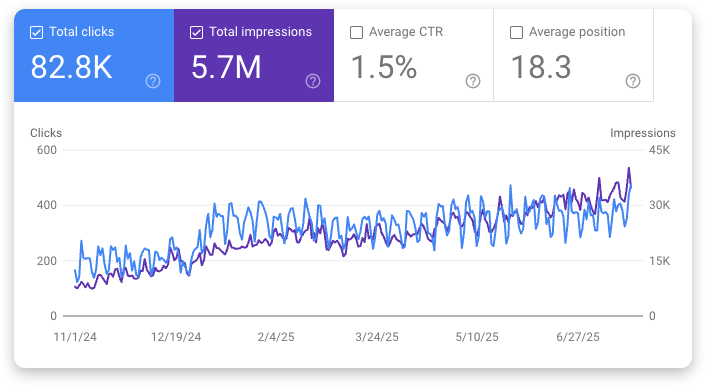
Common Situation: A business owner installs a GEO plugin and, overnight, their website expands from 30 pages to 300. Initially, they might see a small uptick in impressions as Google crawls the new URLs. However, because these pages have low engagement (high bounce rates, short time on page) and lack unique, valuable information, they fail to rank for any meaningful keywords. Worse, they can dilute the authority of your core pages, making it harder for your entire site to rank.
Think of your website’s authority like a pie. If you have a few strong, authoritative pages, each gets a significant slice. If you suddenly divide that pie among hundreds of weak pages, each slice becomes minuscule. A better SEO content generator strategy focuses on creating robust, helpful content for your most important locations, rather than superficial content for every possible location.
If you are experiencing a surge in pages but a drop in meaningful traffic, it might be time to reassess your automated content strategy. For professional guidance on creating a content plan that builds authority, sica.ai can help evaluate your specific situation.
Myth #3: AI Understands Your Business and Brand Voice
An automated blogging tool lacks the most critical component of effective marketing: understanding. It doesn’t know your company’s story, your unique selling propositions, or the specific voice that resonates with your customers. The output is often generic, sterile, and devoid of the personality that builds brand trust.
AI tools are trained on vast datasets of existing online content. This means they are excellent at regurgitating common phrases and industry jargon but struggle to capture the subtle nuances of a brand’s voice. Relying solely on automation often leads to generic and ineffective outcomes because AI lacks strategic thinking and contextual understanding. It can’t convey the passion you have for your work or the specific care you provide to Worldwide families.
Insider Tip: One of the biggest mistakes clients make is treating AI as a “set it and forget it” solution. Even if you use an AI tool for a first draft, human oversight is essential. An expert needs to review, edit, and inject your brand’s personality, local insights, and genuine expertise into the content. Without this human touch, your website will sound like everyone else’s.
The Hidden Costs of “Automated” SEO
The promise of automation is a reduction in time and effort. However, many business owners find that these SEO automation plugins create new, unforeseen work. The dream of a hands-off solution quickly fades when faced with the reality of managing and cleaning up the mess left by unchecked AI.
Here’s what professionals frequently observe:
- The Need for Constant Fact-Checking: AI models can “hallucinate” or present outdated information as fact. This is particularly dangerous for businesses in regulated industries or those providing technical services, where inaccuracies can damage credibility and create liability.
- Cleaning Up Duplicate & Thin Content: When the plugin inevitably fails to deliver rankings, the business owner is left with the tedious task of auditing and removing hundreds of spammy pages that could be dragging down the entire site.
- Fixing Broken Formatting and Links: Fully automated systems often result in formatting issues, such as broken images or irrelevant internal links, making pages look unprofessional.
- Inconsistent NAP Information: A major risk with some automated tools is the creation of inconsistent Name, Address, and Phone number (NAP) details across pages, which confuses search engines and hurts local rankings.
Ultimately, the “automation” simply shifts the work from content creation to content correction and damage control. The time you thought you were saving is spent fixing problems you didn’t have before.
A Smarter Approach: AI as an Assistant, Not an Author
This isn’t to say that AI has no place in a modern SEO strategy. When used correctly, AI is a powerful assistant. It can accelerate research, help brainstorm topics, and even generate outlines. The key is to keep the human expert—the business owner or marketing professional—in the driver’s seat.
Here’s how Worldwide-based professionals are successfully integrating AI without falling for the hype:
- For Research and Ideation: Use AI tools to analyze competitor content or generate a list of common customer questions for a specific service area. This can significantly speed up the initial research phase.
- To Create First Drafts: An AI can produce a basic draft of a service page. A human expert then rewrites and enriches this draft with real-world experience, specific project examples, local landmarks, and the unique brand voice.
- For On-Page Optimization: AI can help generate meta titles and descriptions or suggest related keywords to include in your human-written content.
This balanced approach leverages the speed of AI while preserving the authenticity and quality that only a human can provide. The goal of a content optimization plugin should be to enhance your expertise, not replace it.
For professional guidance on integrating AI effectively into your content strategy, sica.ai offers solutions that combine technological efficiency with human expertise.
Local Expert FAQ
Is Google against all AI-generated content?
No. Google’s official stance is that it rewards high-quality, helpful content, regardless of how it’s produced. The problem is not the use of AI itself, but its use to create spammy, low-value content primarily to manipulate search rankings, which violates their spam policies.
Can a GEO plugin hurt my SEO?
Yes, if used improperly. A GEO WordPress plugin that creates hundreds of thin, duplicative, or generic location pages can lead to penalties and dilute your website’s overall authority, making it harder to rank for any keywords.
What is Generative Engine Optimization (GEO)?
Generative Engine Optimization (GEO), not to be confused with geo-targeting, is the practice of optimizing content to be understood and cited by AI-powered search engines and chatbots. It focuses on clear, structured data and demonstrating entity authority so that AI models trust your information enough to include it in their answers.
Should I have a page for every city I serve?
It depends. For your primary markets, yes, a unique, high-quality page is essential. For smaller, surrounding towns, it’s often more effective to group them into a regional “Areas We Serve” page that demonstrates your service area without creating thin content.
What’s a better alternative to fully automated GEO plugins?
A better strategy involves using a robust SEO plugin like Rank Math or Yoast for foundational on-page optimization, combined with a human-led content strategy. Create detailed, genuinely helpful pages for your top 3-5 service locations, including local testimonials, project photos from that area, and specific local information. This approach builds far more trust and authority.
Key Takeaways
- The promise of fully automated local SEO from GEO WordPress plugins is largely a myth; they often create more problems than they solve.
- AI-generated content frequently lacks genuine local nuance, leading to generic pages that don’t connect with customers.
- Publishing a high volume of low-quality, AI-generated pages can harm your SEO by creating thin or duplicate content issues.
- AI cannot replicate your unique brand voice or business expertise, resulting in sterile content that fails to build trust.
- The “hidden costs” of automation include the need for extensive fact-checking, content cleanup, and fixing technical errors.
- A smarter approach uses AI as an assistant for research and drafting, while a human expert provides the crucial final touches of quality and authenticity.
- Focus on creating high-quality, valuable content for your most important service areas rather than trying to cover every possible location with weak content.
While we aim for accuracy, please verify details for your specific situation. For personalized advice and to discuss how these insights apply to your specific needs, we would love to chat with you directly.
The allure of a quick fix for local SEO is strong, but true digital authority isn’t built by an algorithm alone. It’s built on genuine expertise, authentic content, and a real connection with the communities you serve here in Worldwide. Don’t let the AI myth distract you from the fundamentals that truly drive results. If you’re ready to build a powerful, sustainable local SEO strategy, contact sica.ai today.