When Your Business Should Automate Blogging Efforts
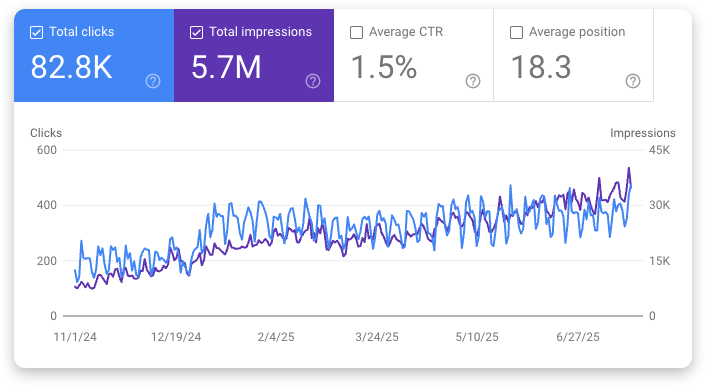
Here’s a claim that might surprise you: the biggest mistake businesses make with content isn’t publishing too little, it’s spending too much time on the wrong parts of the process. Picture this: your marketing manager spends 15 hours a week wrestling with blog topics, outlines, and first drafts, only to publish inconsistently. Now, imagine slashing that time by 80% while increasing your content output. This isn’t a futuristic fantasy; it’s the reality for businesses strategically embracing blogging automation. The question is no longer if you should automate, but when and how to do it without sacrificing the quality that builds trust and drives growth.
The Tipping Point: Recognizing the Signs You Need Automation
Many business owners and marketing teams operate in a state of “content crunch,” where the demand for fresh, high-quality blog posts constantly outstrips their capacity to create them. This is a critical inflection point. Recognizing the signs that your current process is unsustainable is the first step toward a more efficient, scalable strategy. If these scenarios feel familiar, it’s time to seriously consider an automated blogging tool.
Common Situations Pointing to a Need for Automation:
- The Content Bottleneck: Your list of keyword ideas is a mile long, but your output is a trickle. You know you need to publish two, three, or even four times a week to compete, but your team can barely manage one. This gap between strategic goals and actual production is a classic sign that your manual process is the bottleneck.
- Inconsistent Publishing Schedules: One week you publish three articles; the next, you publish none. This sporadic schedule confuses your audience and tells search engines that your site isn’t a reliable source of fresh information. Consistency is a major ranking factor, and automated systems excel at maintaining a steady content stream.
- Scaling Ambitions Meet Reality: You want to expand into new service areas, target different customer personas, or launch a new product line. Each of these initiatives requires a dedicated stream of content. Manually creating this volume of diverse content is often prohibitively expensive and slow, stalling your growth plans before they even start.
- Team Burnout is High: Your best minds are bogged down in the repetitive, time-consuming tasks of drafting, basic formatting, and initial SEO tagging. This leads to burnout and prevents them from focusing on high-impact activities like strategy, customer interviews, and creating truly unique, thought-leadership content. Industry professionals consistently find that automating the “heavy lifting” of first drafts frees up creative talent for more strategic work.
- SEO Opportunities Are Being Missed: Your competitors are ranking for hundreds of long-tail keywords that you simply don’t have the bandwidth to target. An automated AI content writer can generate foundational posts for these specific, lower-competition keywords at a scale that is impossible to match manually, capturing valuable organic traffic.
The Strategic Advantage of an Automated AI Content Writer
Integrating an automated blogging tool isn’t just about saving time; it’s about fundamentally shifting your content strategy from a resource-limited chore to a scalable growth engine. For small businesses in Worldwide and beyond, this transition can level the playing field, allowing them to compete with larger companies on the digital stage. Over 80% of marketers are already using AI, with many reporting increased productivity and better results. The benefits are clear and measurable.
At its core, automation supercharges your ability to execute a modern SEO strategy. Consider the sheer volume of content required to establish topical authority. An automated AI content writer allows you to produce comprehensive articles on core topics and related sub-topics with incredible speed. This demonstrates to search engines that you are a knowledgeable source, boosting your overall domain authority. According to recent marketing statistics, 68% of companies have seen their content marketing ROI grow since using AI.
Furthermore, the right SEO WordPress plugin can ensure that every piece of content is optimized from the ground up. These tools don’t just write; they can analyze SERPs, suggest relevant keywords, generate meta descriptions, and ensure proper heading structure. This data-driven approach removes much of the guesswork from on-page SEO. Instead of hoping a post will rank, you are creating it based on a formula proven to work.
Imagine a typical scenario for a Worldwide-based service business. They want to rank for “emergency plumbing in Worldwide,” but also for dozens of related terms like “leaky faucet repair,” “water heater installation,” and “clogged drain solutions.” Manually writing in-depth articles for each of these would take months. An automated blogging tool can generate high-quality first drafts for all of these topics in a matter of days, which can then be reviewed and personalized by a human expert. This combination of speed and human oversight is the key to dominating a local market.
If your business is struggling with content bottlenecks or inconsistent publishing, exploring an AI-powered solution is the next logical step. For professional guidance on integrating these tools effectively, sica.ai can help evaluate your specific situation.
Not a Magic Bullet: Where Human Oversight Remains Crucial
The rise of the AI blogging tool has sparked a legitimate fear: will my content sound robotic and damage my brand? This is a valid concern, and it highlights the most common mistake businesses make when adopting this technology—treating it as a “set it and forget it” solution. Automation is a powerful assistant, not a replacement for human expertise, strategy, and brand voice. Experts in SEO content generation consistently find that the most successful strategies blend AI efficiency with human creativity.
Google’s stance on this is clear: they reward high-quality, helpful content, regardless of how it’s produced. However, they penalize spammy content created solely to manipulate search rankings. Content that lacks originality, effort, or adds no real value can receive the lowest quality ratings. This is where human oversight becomes non-negotiable.
Industry professionals recommend a hybrid workflow:
- Strategy and Ideation (Human-led): You understand your customers’ pain points and your business goals. This stage involves defining the target audience, conducting keyword research, and setting the strategic direction for each piece of content.
- Drafting and Structuring (AI-powered): Use an automated AI content writer to generate a well-structured first draft based on your strategic inputs. This is the “heavy lifting” phase where AI excels, handling research, outlining, and initial writing.
- Refinement and Personalization (Human-led): This is the most critical step. A human editor must review the AI-generated draft to:
- Fact-check all claims: AI can “hallucinate” or use outdated information, which is a major risk to your credibility.
- Inject brand voice and tone: Add your company’s unique personality, humor, and perspective.
- Incorporate unique insights: Weave in personal stories, proprietary data, customer testimonials, or expert opinions that an AI cannot generate.
- Ensure E-E-A-T: Add elements that demonstrate Experience, Expertise, Authoritativeness, and Trustworthiness—qualities Google prioritizes.
An insider tip: Don’t just edit the AI’s output. Actively look for opportunities to add specific examples relevant to your audience. For a business serving Worldwide residents, this could mean referencing local landmarks, seasonal concerns, or area-specific regulations to make the content more relatable and valuable.
Choosing the Right SEO Automation Plugin for Your Business
Once you’ve decided to embrace automation, the next step is selecting the right tool. The market is filled with options, from standalone AI writers to fully integrated WordPress plugins. The best choice depends on your technical comfort level, your specific goals, and your budget. For most businesses running on WordPress, an integrated SEO automation plugin offers the most seamless workflow.
When evaluating a GEO WordPress plugin or a broader SEO WordPress plugin, professionals look for a specific set of features that go beyond simple text generation. Your goal is to find a tool that acts as a true content optimization partner.
Key Features to Look For:
- Deep WordPress Integration: The tool should work within your WordPress editor, not require you to constantly switch between tabs. This streamlines the process of generating, editing, and publishing. Plugins like Rank Math and All in One SEO (AIOSEO) are excellent examples of tools that bring AI features directly into your dashboard.
- Content Optimization and Scoring: The best plugins don’t just write; they analyze. They should provide real-time feedback on your content’s SEO-friendliness, scoring it based on factors like keyword usage, readability, heading structure, and internal link suggestions.
- GEO-Targeting Capabilities: For businesses here in Worldwide, the ability to optimize content for local search is paramount. An AI search plugin for GEO should help you naturally incorporate location-based keywords and structure your content to appeal to a local audience.
- Built-in SERP Analysis: Advanced tools analyze the top-ranking pages for your target keyword and provide data-driven suggestions on what topics to cover, what questions to answer, and how long your article should be to compete effectively.
- Scalability and Pricing: Consider how the tool’s pricing model aligns with your growth. Does it limit the number of articles you can generate per month? Look for a plan that offers the flexibility to scale your content production as your business grows.
A common mistake clients make is choosing a tool based on hype rather than its fit for their actual workflow. Before committing, take advantage of free trials to see how the plugin integrates with your site and whether its interface feels intuitive to your team.
Navigating the options for small business SEO solutions can be overwhelming. If you need help selecting and implementing the right AI blogging tool, the experts at sica.ai are ready to assist.
A Practical Framework: When to Automate vs. When to Write Manually
Strategic automation is not an all-or-nothing proposition. The smartest content marketers use AI as a tool for specific jobs, while reserving their manual efforts for content where the human touch provides a distinct competitive advantage. Knowing which tasks to assign to your automated blogging tool and which to entrust to your human experts is crucial for maximizing both efficiency and impact.
Consider this typical scenario for a growing e-commerce business:
Automate These Types of Content:
- Top-of-Funnel, Informational Posts: Think “What is [product category]?” or “How does [technology] work?” These foundational articles are necessary for capturing search traffic but don’t require deep, personal storytelling. An AI can generate comprehensive, factual first drafts that can be quickly edited and published.
- Product Descriptions at Scale: If you’re launching hundreds of new products, manually writing unique, SEO-optimized descriptions is a monumental task. An AI can generate variations based on a template and product specs, saving hundreds of hours.
- Glossary or Definitional Content: Creating a resource hub with definitions of industry terms is a fantastic SEO strategy. Automation is perfectly suited for generating these concise, factual entries.
- Initial Drafts for List-Based Articles: For posts like “10 Ways to Use [Product],” an AI can quickly generate the initial list and foundational text for each point. A human writer can then come in to add unique examples and a compelling narrative.
Write These Manually From Scratch:
- Thought Leadership and Opinion Pieces: Articles that establish your brand’s unique perspective, challenge industry norms, or make future predictions must be written by your experts. This is where your brand’s voice and authority are built.
- Case Studies and Customer Success Stories: These posts rely on nuanced storytelling and emotional connection to be effective. A human writer is needed to conduct interviews and craft a compelling narrative that showcases the customer’s journey and results.
- Sensitive “Your Money, Your Life” (YMYL) Topics: If your blog covers financial, legal, or health-related topics, providing inaccurate information can have serious consequences. These articles demand the highest level of human expertise and fact-checking from the very beginning.
- In-Depth Product Reviews or Comparisons: While an AI can summarize features, a truly valuable review requires hands-on experience and subjective analysis. Your personal experience and authentic opinion are the value-adds that build trust with your audience.
By segmenting your content strategy this way, you leverage automation for scale and efficiency while focusing your most valuable resource—human creativity and expertise—where it matters most.
Local Expert FAQ
When should a small business in the Worldwide area start using an SEO automation plugin?
Industry professionals recommend considering an SEO automation plugin when you find that content creation has become a bottleneck to your growth. If you have a solid understanding of your target keywords but lack the time and resources to create content consistently (i.e., at least 2-4 times per month), automation can bridge that gap. It’s the perfect tool to scale your efforts once your initial strategy is in place.
Will using an automated AI content writer hurt my local SEO rankings?
No, as long as it’s used correctly. Google’s focus is on the quality and helpfulness of the content, not its origin. For Worldwide-based professionals, an AI tool can be a powerful asset for local SEO. You can use it to quickly generate content for various local service keywords, but it is essential that a human reviews each piece to add local context, verify information (like business hours or service areas), and ensure the tone resonates with the local community.
What’s the biggest mistake Worldwide families or businesses make with AI blogging?
The most common mistake is over-reliance without human oversight. Many businesses get excited by the speed of content generation and start publishing AI drafts directly without editing. This often leads to generic, factually inaccurate, or off-brand content that fails to connect with readers and can even damage credibility. Always treat the AI’s output as a first draft that needs human refinement.
Can an AI blogging tool help me rank for competitive keywords?
It can be a crucial part of the strategy. For highly competitive keywords, you need comprehensive, authoritative content. An AI tool can help by performing initial research, creating a detailed outline based on top competitors, and drafting sections of the article. This speeds up the creation of the long-form content (2,000+ words) that is often required to rank for competitive terms. However, a human expert must add the unique insights, data, and experience that will ultimately make your piece stand out.
Is it expensive to get started with an automated blogging tool?
The cost varies, but many powerful SEO WordPress plugins offer surprisingly affordable entry-level plans suitable for small businesses. Tools like Rank Math or AIOSEO have free versions with basic features and premium plans that unlock advanced AI capabilities. When you consider the cost of hiring a writer or the hours of your own time spent on manual creation, the ROI on an automation tool is often very high.
Key Takeaways
- Automation is a response to bottlenecks. The right time to automate is when your manual content process can no longer keep up with your strategic goals for growth and consistency.
- It’s a hybrid model, not a replacement. The most effective strategy combines AI-powered drafting for speed and scale with human-led editing for accuracy, brand voice, and unique insights.
- Google rewards quality, not method. Your primary focus should be on creating helpful, reliable, people-first content. As long as your AI-assisted content meets this standard, it can perform well in search.
- Choose tools that integrate into your workflow. For WordPress users, an integrated SEO plugin that offers content generation and optimization within the dashboard is typically the most efficient choice.
- Automate for scale, write manually for impact. Use automation for foundational, informational content and reserve your human experts for thought leadership, case studies, and high-stakes YMYL topics.
- Human oversight is non-negotiable. Never “set it and forget it.” Fact-checking, adding personal stories, and ensuring brand alignment are essential steps that prevent generic content and build reader trust.
- Start with a clear strategy. Generating content without clear goals or a defined audience is a common mistake. Your content strategy should guide your automation efforts, not the other way