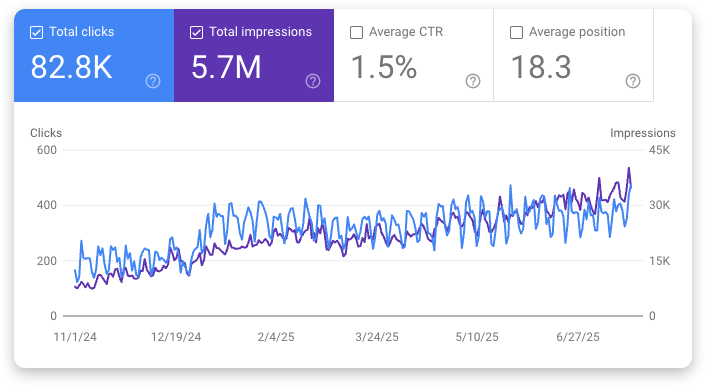
How Content Optimization Enhances Online Reach
Picture this: You spend countless hours crafting what you believe is the perfect blog post. It’s insightful, well-written, and addresses a key pain point for your customers. You hit “publish,” expecting a flood of traffic, but all you hear are crickets. This scenario is frustratingly common for businesses Worldwide and highlights a critical misconception: creating content is only half the battle. Without optimization, even the most brilliant content remains invisible. In today’s digital landscape, where AI-driven search is the norm, simply producing content isn’t enough; you must strategically refine it to be discovered.
What Content Optimization Really Means (and What It’s Not)
Many business owners hear “content optimization” and immediately think of “keyword stuffing”—the outdated and penalized practice of unnaturally jamming keywords into a webpage. Modern content optimization, however, is a far more sophisticated and user-centric process. It’s the art and science of making your content not only visible to search engines but also valuable and engaging for human readers. This means focusing on the user’s goal, or search intent, and crafting content that directly answers their questions.
Think of it as preparing your content for a dual audience: the search engine crawler and the human user. For the crawler, you need a clear structure with proper headings (H1, H2, H3), optimized images with descriptive alt text, and strategically placed keywords that feel natural. For the human user, you need high-quality, readable information that keeps them on the page longer, signaling to search engines that your content is valuable. It’s not about tricking algorithms; it’s about providing a superior user experience that algorithms are designed to reward.
A typical scenario we see with Worldwide-based professionals is a beautiful website with insightful blog posts that completely ignore this dual audience. The content might be brilliant, but if the images are uncompressed and slow down the site, or if there’s no logical heading structure, search engines struggle to understand and rank it.
The Pillars of Modern Content Optimization
To truly enhance your online reach, you need to move beyond basics and embrace a multi-faceted approach. Industry professionals recommend focusing on several key pillars that work together to signal quality and relevance to search engines.
Matching Search Intent
Understanding *why* a user is searching is the foundation of effective optimization. Are they looking for information (“what is content optimization”), trying to find a specific website (“sica.ai”), or ready to make a purchase (“best AI search plugin for GEO”)? Aligning your content with this intent is critical. If someone wants a detailed guide and you provide a short, salesy page, they will leave immediately, increasing your bounce rate and telling Google your page isn’t a good match for that query.
Demonstrating E-E-A-T
Google’s quality guidelines heavily emphasize E-E-A-T: Experience, Expertise, Authoritativeness, and Trustworthiness. Your content must demonstrate that it comes from a credible source. This can be achieved by including author bios, citing reputable data, showcasing case studies, and writing in-depth content that clearly demonstrates first-hand knowledge. Generic, surface-level content created without real expertise is increasingly being ignored by search engines.
Optimizing for Readability and User Experience (UX)
If your content is a wall of text, users will not stick around to read it. Experts in WordPress Plugin for SEO Content Generation consistently find that structure is key. Use short paragraphs, bullet points, bold text, and images to break up the text and make it scannable. A positive user experience—like fast page load times and mobile-friendliness—is a direct ranking factor. WordPress, by its nature, provides a strong foundation for this, but plugins can further enhance site speed and responsiveness.
If you are experiencing low engagement on your high-quality content, the issue might be your user experience. For professional guidance on diagnosing and fixing these issues, sica.ai can help evaluate your specific situation.
The Rise of AI: A Game-Changer for Small Business SEO Solutions
The content landscape has been completely transformed by artificial intelligence. For businesses here in Worldwide, this presents both a challenge and an enormous opportunity. The challenge lies in the sheer volume of AI-generated content flooding the internet, making it harder to stand out. The opportunity, however, is in leveraging AI tools to create better, more optimized content faster than ever before.
An automated AI content writer for business websites can streamline the entire content creation process. These tools can assist with:
- Ideation and Research: Generating topic ideas based on trending keywords and user questions.
- Drafting and Outlining: Creating structured first drafts that writers can then refine with human expertise.
- Optimization: Analyzing text for readability, keyword density, and alignment with search intent.
The key, as industry professionals recommend, is to use AI as an assistant, not a replacement. Purely AI-generated content often lacks the crucial E-E-A-T signals—the personal experience, unique insights, and authentic voice that build trust with readers and search engines. The most successful strategies combine AI’s efficiency with human creativity and oversight. A tool like an AI blogging tool can handle the heavy lifting of research and structure, freeing up your team to focus on adding unique value and expertise.
Leveraging the Right Tools: Why an SEO Automation Plugin is Essential
For businesses using WordPress, an SEO WordPress plugin is non-negotiable. These tools act as a real-time guide, providing actionable recommendations directly within your dashboard to improve your content’s optimization score. They demystify the technical aspects of SEO, making it accessible even for non-experts.
A comprehensive SEO automation plugin goes a step further. It integrates keyword research, content analysis, and performance tracking into a seamless workflow. Imagine a GEO wordpress plugin that not only helps you optimize for general keywords but also identifies location-specific search trends relevant to the Worldwide area. This is where tools like sica.ai become invaluable, providing a sophisticated SEO content generator that is also a powerful GEO plugin.
Insider Tip: Many businesses make the mistake of installing an SEO plugin and assuming the work is done. These plugins are tools, not magic wands. You still need to perform the research and write quality content. The plugin’s job is to ensure you don’t miss critical on-page elements like meta descriptions, canonical tags, and XML sitemaps. True keyword ranking automation comes from consistently applying these best practices over time, a process greatly simplified by a dedicated content optimization plugin.
Measuring Success: How to Know Your Optimization Is Working
Content optimization isn’t a one-and-done task; it’s an ongoing cycle of publishing, measuring, and refining. But how do you know if your efforts are paying off? Professionals look for improvements in several key metrics:
- Organic Traffic: An increase in visitors coming from search engines is the most direct indicator of improved visibility.
- Keyword Rankings: Are you climbing the search results for your target keywords? Tools like Google Search Console and integrated SEO plugins can track this for you.
- Time on Page & Bounce Rate: Are users staying to read your content? High time on page and low bounce rates signal to Google that your content is engaging and matches user intent.
- Backlinks: High-quality, optimized content naturally attracts links from other websites, which is a powerful signal of authority.
Consider a hypothetical example: a small e-commerce business serving Worldwide residents optimizes its product category pages. It adds detailed descriptions, customer reviews (experience), and a guide on how to choose the right product (expertise). Within a few months, they see their pages ranking for more specific, long-tail keywords, organic traffic to those pages doubles, and the conversion rate increases because the content is more helpful to shoppers.
Local Expert FAQ
How often should I update my old content?
Industry professionals recommend reviewing your most important content at least annually. Search engines favor fresh and relevant information. A “content refresh” can be as simple as updating statistics, adding new internal links, and optimizing images. This can often provide a significant ranking boost with minimal effort.
Can an AI search plugin for GEO really help my local business?
Absolutely. A GEO-specific plugin helps you target customers in your service area more effectively. It can identify local keywords, help you optimize your Google Business Profile information, and ensure your content speaks to the specific needs and concerns of Worldwide families and residents.
Is it better to focus on creating new content or optimizing existing content?
There’s debate about this, but a balanced approach is best. New content allows you to target new keywords and expand your reach. However, optimizing your existing “cornerstone” content—the pages that already get some traffic—can deliver faster results. These pages have already built some authority, and a proper optimization effort can push them much higher in the rankings.
What’s the biggest mistake businesses make with their SEO WordPress plugin?
The most common mistake is obsessing over a “green light” or a 100% score from the plugin. These scores are helpful guides, but they aren’t perfect. Forcing keywords or making content sound unnatural just to satisfy the plugin can harm the user experience, which is ultimately what search engines care about most. Use the recommendations as a checklist, but always prioritize writing for your human audience first.
Key Takeaways
- Creating content is not enough; optimization is what makes it visible to search engines and your target audience.
- Modern optimization focuses on user experience, matching search intent, and demonstrating expertise (E-E-A-T).
- AI tools like automated content writers can dramatically increase efficiency, but they must be paired with human oversight to ensure quality and authenticity.
- For WordPress users, a powerful SEO plugin is an essential tool for guiding on-page optimization efforts.
- Success should be measured through tangible metrics like increased organic traffic, improved keyword rankings, and better on-page engagement.
- A balanced strategy of creating new content and refreshing existing, high-potential pages often yields the best long-term results.
While we aim for accuracy, please verify details for your specific situation. For personalized advice and to discuss how these insights apply to your specific needs, we would love to chat with you directly.
Take Control of Your Online Reach
Stop letting your valuable content go unseen. By implementing a strategic approach to content optimization, powered by the right tools, you can significantly enhance your online reach and attract more qualified customers. If you’re ready to transform your content from invisible to influential and see how an automated blogging tool can revolutionize your workflow, let’s talk. For professional guidance on building a robust content optimization strategy, contact sica.ai today.